Booths vs. Chairs: Which Is Right for Your Foodservice Space?
December 23, 2025
Posted in : Uncategorized
Seating is one of the most influential elements of a foodservice environment, yet it is so commonly overlooked. The right seating impacts everything from how your customers feel to how long they stay to how efficiently your staff operates. It plays a big part in the success or failure of any dining establishment over time. When planning a new restaurant build or diner renovation, one of the most common questions business owners face is whether to opt for booth seating or chairs.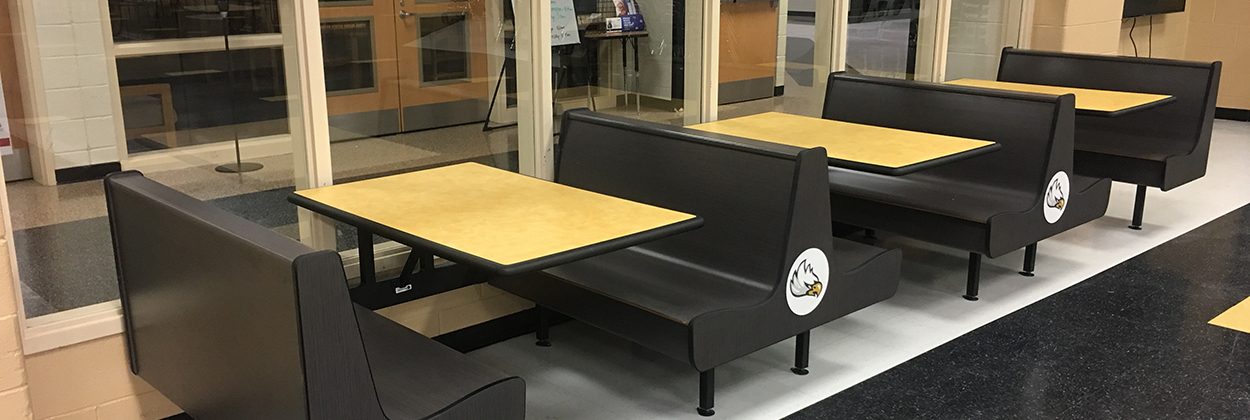
There is no right or wrong answer to this conundrum. The best foodservice seating option depends on a range of different factors, including your layout, foot traffic, brand identity, and operational needs. But understanding the practical and aesthetic differences between commercial booth seating and chair/table seating can help you make an informed decision that will benefit both your customers and your business.
Booths vs. Chairs: Understanding Your Options
In general, most foodservice environments rely on two primary seating types: commercial booth seating and chair and table seating. Both are perfectly adequate solutions across restaurants, diners, cafes, bars, and other dining spaces, but each serves a different purpose.
Booths are fixed and often integrated into the design architecture of a space. Chairs and tables, however, are movable and easy to reconfigure. Although you might have a preference, neither option is inherently better. The value depends on how well the seating supports your foodservice business’s operations and goals.
Commercial Booth Seating
Advantages
Booth seating has always been a staple of restaurant and cafeteria design, and for good reason. One of its biggest advantages is comfort. The high-backed, cushioned seats and sense of personal space and privacy offered by a booth naturally encourage guests to relax and linger for longer. For restaurants that rely on repeat visits or longer dining experiences, booths can enhance customer satisfaction and loyalty.
From a design perspective, booths are also highly space-efficient. When built along walls or arranged back-to-back, they allow you to maximize seating capacity without hindering traffic flow. They are also more easily customized to fit in with your brand identity. The upholstery, finishes, and even the shape of the booth itself can be tailored to create any mood you desire. This is much harder with a standard table and chair layout.
Another key benefit is durability. Because booths are fixed in one place, they experience less wear and tear than chairs and tables that are constantly being moved around. A well-constructed booth will withstand years of high traffic, making them a strong long-term investment.
Disadvantages
While booths offer many advantages, they are not without their limitations. The fact that they are fixed in place means you have less flexibility if you wish to change your establishment’s layout in the future.
They also tend to be a more costly option, requiring a higher upfront investment than standard seating.
Chair and Table Seating
Advantages
Chair and table seating is the most flexible and versatile of all foodservice seating options. Loose furniture can be easily rearranged to accommodate different group sizes, busy peak periods, special events, or custom group requirements. This is ideal for small businesses in the growth stage who can keep adding furniture as their customer base increases.
Chairs also support accessibility and inclusivity. Movable seating makes it easier to accommodate guests with disabilities, mobility issues, or complex needs. This ensures your establishment adheres with accessibility requirements and does not exclude any possible customers.
From a financial standpoint, chairs are more cost-effective upfront, and can be added incrementally as your business requires.
Disadvantages
Because chairs are constantly moved about, they are more prone to wear and tear than fixed booths, especially in high-traffic spaces. If going down this route, it is essential you select well-constructed, contract-grade chairs in order to maintain safety and a professional aesthetic over time. Additionally, loose furniture requires extra labor for staff to manually return tables and chairs to their original layout at the end of each shift. These layouts also require more active monitoring to prevent crowding or inefficient traffic flow during peak periods.
Key Factors to Consider When Choosing Seating
When evaluating booth seating vs chairs, several factors should guide your decision:
- Customer Behavior: Are guests dining quickly or staying longer?
- Available Space: Do you need to maximize the use of a small space or fill a larger area?
- Brand Identity: Does your business require an intimate, personal space, or a busy, social one?
- Operational Efficiency: How will seating impact factors like cleaning, service, and ongoing maintenance?
- Financial Outlay: Can you afford an initial investment in fixed booths, or do you need to start small and build incrementally?
- Durability: How will the furniture hold up over years of constant use?
Your answers to these questions will no doubt reveal that there is no single correct choice, just the most suitable solution for your specific foodservice operation.
The Case for a Hybrid Seating Approach
When considering the best option between booths and chairs, the answer doesn’t have to be binary. In fact, many of today’s most successful foodservice spaces combine booths and chairs to get the best of both worlds. A hybrid seating strategy allows operators to create various seating zones within their establishment. You can offer booths for longer, more comfortable dining experiences and tables with chairs for quick meals, last-minute walk-ins, or flexible parties.
This approach can increase aesthetic appeal, improve functionality, save money, and future-proof your foodservice space. Mixing seating types affords operators an extra level of flexibility, enabling them to adapt more easily to changing traffic patterns and guest preferences without the need for a full redesign.
Why Contract-Grade Furniture is Essential
No matter which seating configuration you choose, durability and quality are non-negotiable. Contract-grade foodservice furniture is specifically engineered for commercial environments, with reinforced construction, high-end materials, and finishes designed to withstand constant use.
Plymold has decades of experience crafting American-made seating solutions for restaurants, cafeterias, and corporate dining spaces. From commercial booth seating to high-performance chairs, Plymold products are built to balance comfort, efficiency, and long-term value. Our contract-grade seating options are built to withstand high-use environments while enhancing guest experience.
Making the Right Seating Choice for Your Space
Ultimately, the decision between booths and chairs isn’t clear-cut. It’s all about function and how your chosen seating design supports your operations, brand, and guest experience.
Whether you choose booths, chairs, or a hybrid approach, investing in well-designed, contract-grade seating ensures your space operates at the highest possible level.